New Zealand
New Zealand
Product Compliance
Bring your product to New Zealand with a clear plan for safety, labelling and technical compliance.
We help manufacturers, importers and brands identify applicable product safety standards, unsafe goods notices and consumer information requirements. Where relevant, we also review electrical or radio requirements, test evidence, labels and supporting documentation.
NEW ZEALAND PRODUCT REQUIREMENTS
Understanding New Zealand Product Requirements
The rules depend on the product you plan to supply. We check applicable safety standards, unsafe goods notices and consumer information requirements, then identify any additional rules relevant to the product.


Product-Specific Requirements
New Zealand has mandatory safety standards for selected products and unsafe goods notices that prohibit the supply of certain goods. We check your product category against the relevant rules and identify what must be addressed before it enters the market.

Testing and Evidence
Existing test reports and supplier documents can provide useful evidence, but they must match the product and the applicable New Zealand requirements. We review their scope, referenced standards and product details to identify gaps or the need for further testing.

Labelling and Consumer Information
Some products require specific warnings, instructions or consumer information. We review product and packaging information against the applicable rules, including any mandatory consumer information standard, so the required details are clear and consistent with the product being supplied.
HOW WE HELP
How We Support
New Zealand Compliance
We help you move from identifying the applicable rules to reviewing the evidence and product information needed for the New Zealand market.
Requirements Research
We identify the New Zealand rules relevant to your product, including any mandatory safety or consumer information standards and unsafe goods notices. Where relevant, we also check electrical or radio requirements before defining the work needed.
Testing and Evidence Review
We review existing test reports, certificates and product information against the requirements identified. This helps clarify what the evidence covers, whether it matches the product being supplied, and where further testing or clarification may be needed.
Labelling and Documentation
We check labels, packaging information and instructions against applicable New Zealand requirements. We also review supporting documents so product details, claims and available evidence are consistent and any missing information is clear.
Compliance Route and Next Steps
We bring the findings together into a practical plan for your product, highlighting outstanding evidence, labelling changes and further checks. This gives you clear next steps to address before supplying the New Zealand market.
NEW ZEALAND PRODUCT SAFETY
Who Is Responsible for Product Safety in New Zealand?
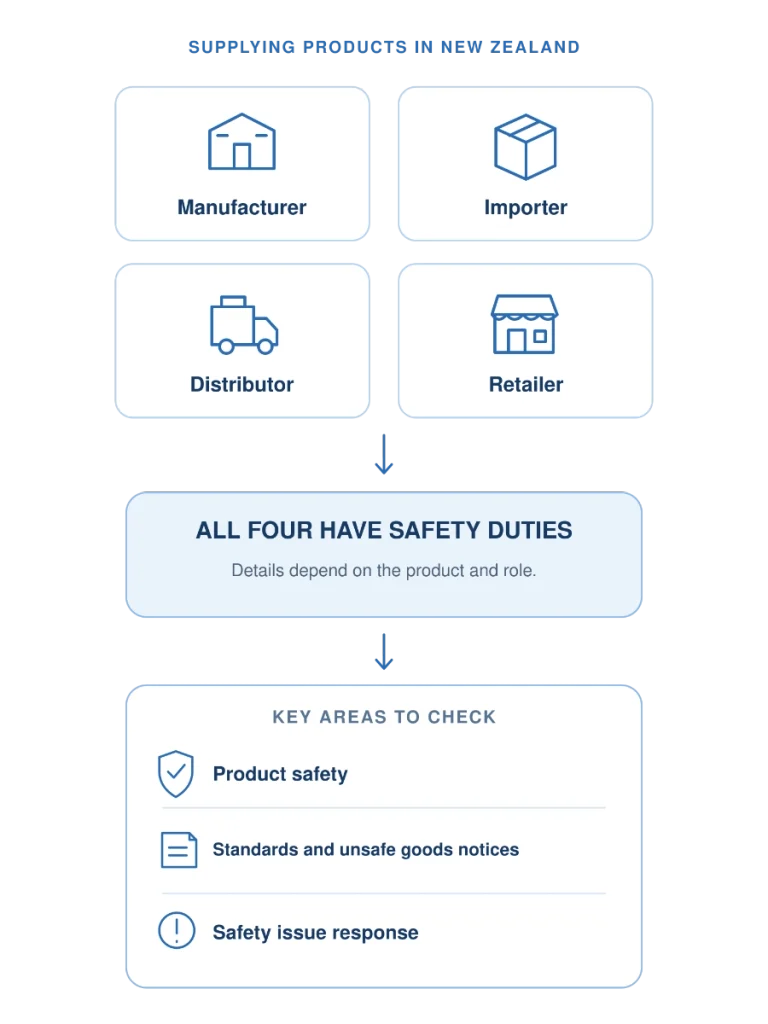
Businesses that manufacture, import, distribute or sell products in New Zealand have product safety responsibilities. The actions each business needs to take depend on its role and the product it supplies.
01
Identify Your Role
A business may manufacture, import, distribute or retail a product, and some businesses perform more than one role. Identify each party’s activities in the supply chain to clarify who should carry out the relevant checks and respond if an issue arises.
02
Check Before Supply
Check whether a mandatory safety standard, an unsafe goods notice or a consumer information standard applies to the product. If you buy from another supplier, ask for relevant product information and evidence; do not assume the product has already been checked.
03
Keep Product Information
Keep clear product descriptions, supplier details and the evidence available for the model being supplied. This helps you verify that the product matches the version assessed and trace the affected goods if a safety concern is reported.
04
Respond to Safety Issues
Monitor complaints and incidents involving products you supply. If a safety concern arises, investigate it promptly and take appropriate action to protect consumers. Depending on the issue, that may include stopping supply or recalling the product.
Please note: Additional duties may apply to particular products, including electrical equipment. Responsibilities should be checked against each business’s actual role and the product being supplied.
NEW ZEALAND REQUIREMENTS
Key New Zealand Product Requirements
New Zealand’s requirements depend on the product being supplied. We identify the applicable rules, review the available evidence and check whether additional safety, consumer information or technical requirements need to be addressed.
Product Safety Standards
FTA
Under the Fair Trading Act 1986, mandatory safety standards apply to selected products. Unsafe goods notices also prohibit the supply of certain goods. We check whether either applies to your product, review the available evidence and identify the steps needed before supply.
Learn more ➞
Consumer Information
FTA
Certain products must display information required by New Zealand consumer information standards. Depending on the goods, this may include care instructions, fibre content or country of origin. We review the applicable standard and the information presented with the product.
Learn more ➞
Electrical Safety
ESR
Electrical appliances and fittings supplied in New Zealand must meet applicable safety requirements. Some product categories also require an approval or a Supplier Declaration of Conformity (SDoC). We check the product classification, supporting evidence and relevant documentation.
Learn more ➞
Radio and EMC Compliance
RSM / EMC
Radio Spectrum Management (RSM) oversees requirements for radio equipment and electromagnetic compatibility (EMC). For products within scope, we review the technical evidence, supplier steps and applicable labelling, including whether the Regulatory Compliance Mark (RCM) or R-NZ is required.
Learn more ➞
NEW ZEALAND FAQ
Frequently Asked Questions
The right compliance route depends on your product, the applicable New Zealand rules and the evidence you already have. These answers cover the questions we hear most often before a product is supplied.
READY FOR NEW ZEALAND?
Make Your New Zealand Compliance Plan Clear
Tell us about your product, the market you plan to enter and the documentation you already have. We’ll help you identify the applicable requirements and the next steps for your project.
We normally reply within one business day.