Australia
Australia Product Compliance
Prepare your product for the Australian market with a clear understanding of the requirements that apply.
We help manufacturers, importers and brands identify applicable Australian product safety requirements, check mandatory standards and product bans, and review relevant labels, testing evidence and documentation before entering the market.
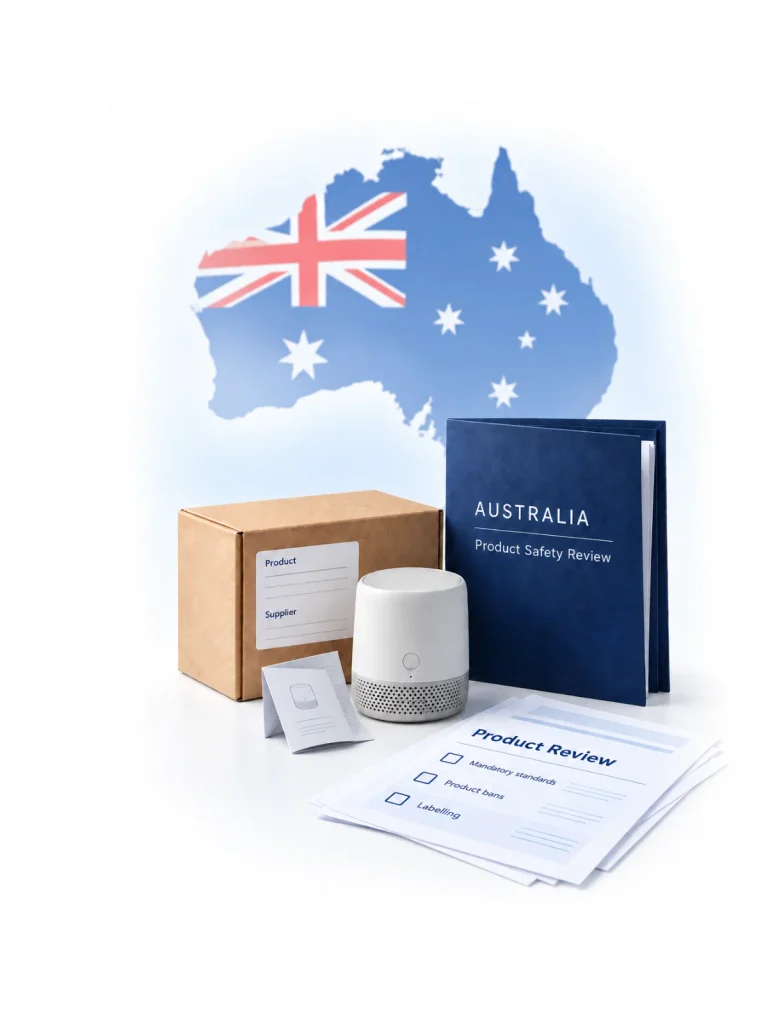
AUSTRALIAN PRODUCT REQUIREMENTS
Understanding Australian Product Requirements
Product safety in Australia is governed mainly by the Australian Consumer Law. The requirements for your product depend on what it is and how it is used. Before selling, it is important to check whether a mandatory standard or product ban applies and what safety information or evidence may be needed.
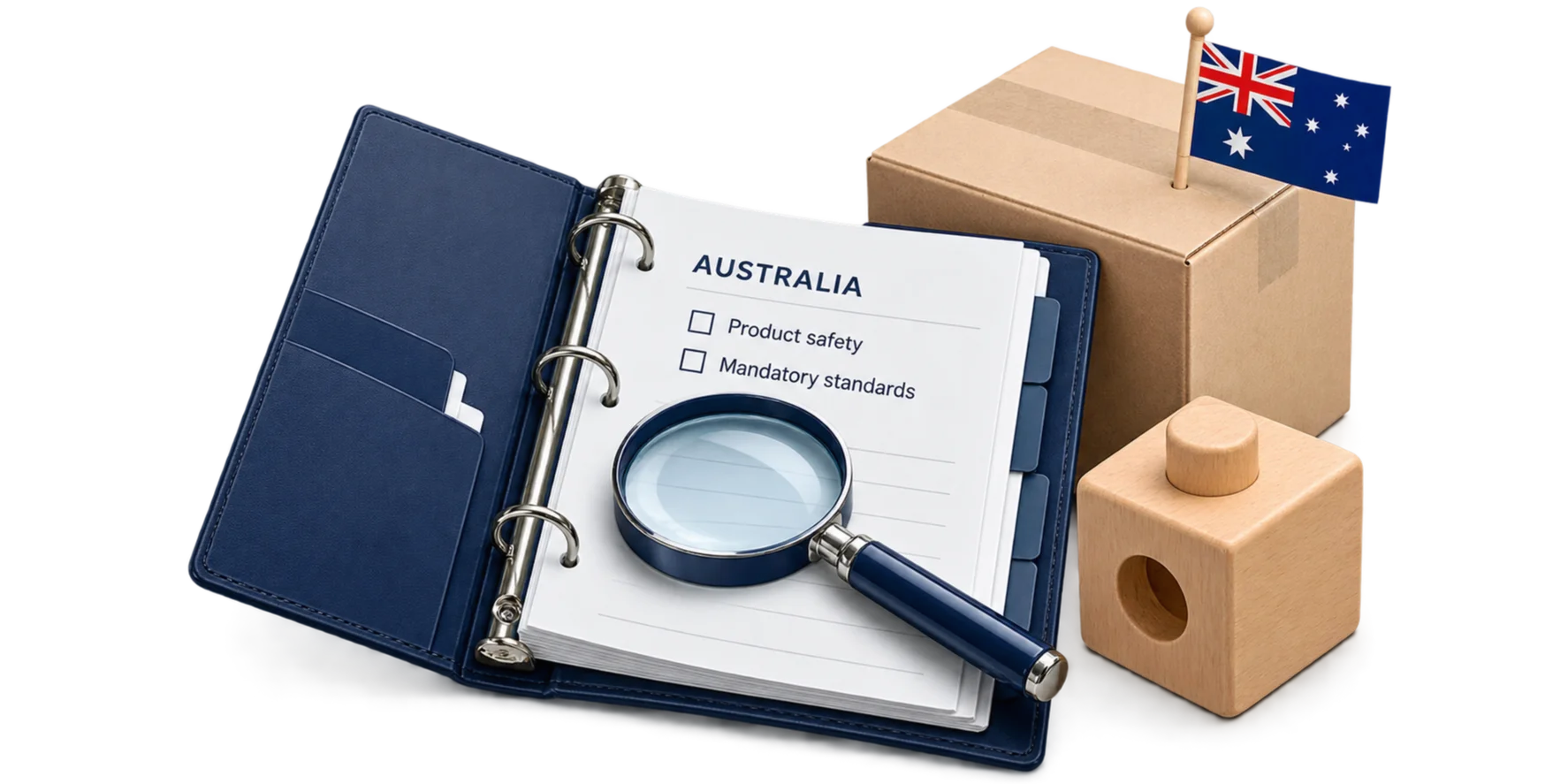

Product-Specific Requirements
Australian requirements depend on the product and its intended use. Some consumer goods are covered by mandatory safety or information standards, while others may be subject to a product ban. The first step is to identify the requirements that apply to that product in Australia.

Testing and Evidence
When a mandatory standard applies, the product must meet its requirements before it is supplied in Australia. Existing test reports can be useful, but their scope needs to match the product and the applicable requirements. Any missing evidence can then be identified.

Labelling and Safety Information
Labelling, warnings and instructions vary by product. Some mandatory standards specify information that must appear on the product or its packaging, while certain imported goods have separate trade-description rules. These details need to be checked against the product being sold.
HOW WE HELP
How We Support
Australian Compliance
We help businesses identify the Australian requirements that apply to their products, review the available evidence, labelling and documentation, and define practical next steps.
Requirements Research
We review your product and its intended use to identify applicable product safety requirements, mandatory standards and bans, as well as other product-specific rules where relevant.
Testing and Evidence Review
We identify testing needs against the applicable requirements and review existing reports to check whether they cover the product and reveal any evidence gaps.
Labelling and Documentation
We review product and packaging information, warnings and instructions where applicable, and check whether your documentation supports the requirements identified for Australia.
Australian Market Responsibilities
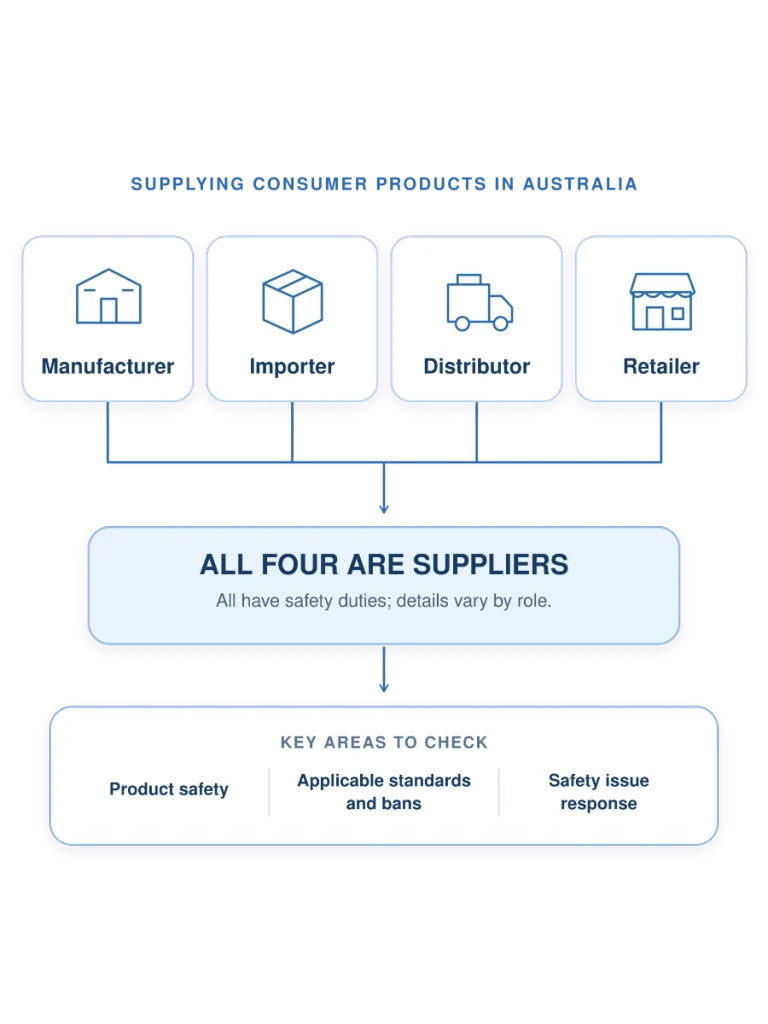
Who Is Responsible for Product Safety in Australia?
Product safety responsibilities extend across the supply chain. Manufacturers, importers, distributors and retailers supplying consumer goods in Australia need to understand the requirements relevant to their role and take action when a safety issue arises.
01
Identify Your Role
If your business manufactures, imports, distributes or sells consumer products for the Australian market, it has product safety responsibilities. Identify your role to understand the specific duties that apply to your activities.
02
Check Before Supply
Check whether mandatory standards or bans apply, and review the product and available evidence before it is offered for sale.
03
Keep Product Information
Keep supplier details, product information and relevant test reports accessible so you can investigate concerns and identify affected products if needed.
04
Respond to Safety Issues
Investigate safety concerns promptly and assess whether a recall or mandatory incident report is required. Certain serious incidents must be reported within two days of becoming aware of them.
Please note: An importer may also be treated as the manufacturer under the Australian Consumer Law if the overseas maker has no place of business in Australia. Responsibilities should be checked against each business’s actual role.
REGULATORY LANDSCAPE
Key Australian Product Requirements
Australian requirements vary by product. Alongside general consumer product safety rules, some categories have specific standards, technical requirements or prescribed safety information. These are four areas we commonly check.
Consumer Product Safety
ACL
The Australian Consumer Law provides the main consumer product safety framework. Mandatory standards and product bans apply to certain goods, including some toys, children’s products and furniture. The applicable rules must be checked for each product.
Wireless Equipment
ACMA
Products with radio or wireless functions may need to meet ACMA technical and labelling rules. Their functions, available test evidence, supplier registration and any applicable RCM requirements should be checked before supply.
Labelling and Safety Information
PRODUCT INFO
Some products require specific warnings or information on the product or packaging, including goods containing button batteries. Certain imported goods also need trade descriptions. The details depends on the product category.
Electrical Equipment Safety
EESS
In-scope household electrical equipment may fall under the Electrical Equipment Safety System in participating jurisdictions. Supplier registration, compliance evidence and RCM marking need to be assessed against the equipment and the applicable rules.
AUSTRALIA COMPLIANCE FAQ
Frequently Asked Questions
About Product Compliance in Australia
Practical answers to common questions about product requirements, existing test evidence and responsibilities in the Australian market.
LET’S GET STARTED!
Planning to Sell Your Product in Australia?
Tell us about your product and the documentation you already have. We’ll help you identify the Australian requirements and the next steps before entering the market.
We normally reply within one business day.